Dressmaker Characters: Friendship and Unlocks
A locked pattern is a reason to check a client's friendship stars, not keep buying cloth. Use the unlock source to choose whose commissions to work on; use that client's gift preferences when you want to make a dress outside a commission.
Last updated: 2026-10-17 · 6 min read
Friendship stars unlock a client's patterns; shop rank unlocks fabric and accessory stock. Find a missing pattern's client and required star before working on another dress. A gift uses the recipient's own preferences and measurements, not the last commission you made for them. For the complete commission lists and every star's rewards, open the Clients database.
Is the missing item a pattern or shop stock?
The character roster is Rose, Prudence, Priya, Marie, Edith, Fiona, Alice, Vivian, Dorothy and Adora. Their friendship progress is separate: a star with Rose is not a star with Vivian. Pattern rewards belong to a particular client and level, so advancing someone else is not a substitute for the unlock written beside the piece you want.
Start with the item itself. A bodice, skirt, sleeve or collar belongs in the pattern lookup. Cloth and decorations belong in the shop catalogues. These are different gates: looking for a friendship reward among the shop's fabrics will not reveal it, while another client star does not replace the rank needed for new shop stock.
Commissions and gifts both connect to friendship. The useful destination is the next reward you actually need, rather than a guessed universal order of clients. Check the named pattern's unlock source, then compare it with that client's current stars in your save.
Choose a client by the piece you want
This is a starting-point map, not the complete reward catalogue. Each row shows one example from that client's first friendship star. Open the client to see the rest of that star's group and later levels. Pattern names below use their displayed names rather than internal data keys.
| Client | Example pattern | Friendship target |
|---|---|---|
| Adora | Delilah Bodice | 1 star |
| Alice | Elevated Scoop Bodice | 1 star |
| Dorothy | Bell Sleeve | 1 star |
| Edith | Corset Bodice | 1 star |
| Fiona | Front Lace Stays | 1 star |
| Marie | Long Cuffed Sleeve | 1 star |
| Priya | Apron Skirt | 1 star |
| Prudence | Heart Princess Bodice | 1 star |
| Rose | Short Sleeve | 1 star |
| Vivian | Twilight Hour Bodice | 1 star |
For example, Rose's first star includes Short Sleeve, Waistcoat Skirt and Waistcoat Bodice. Her second star has a different set. Earning the first reward is not the same as finishing her entire unlock path, and buying a fabric with a suitable style tag does not unlock one of those dress pieces.
If the piece you need is absent from the examples, search the Patterns catalogue by its name. The pattern record identifies its unlock source. Follow that client rather than treating the table above as a recommendation to raise all ten friendships evenly.
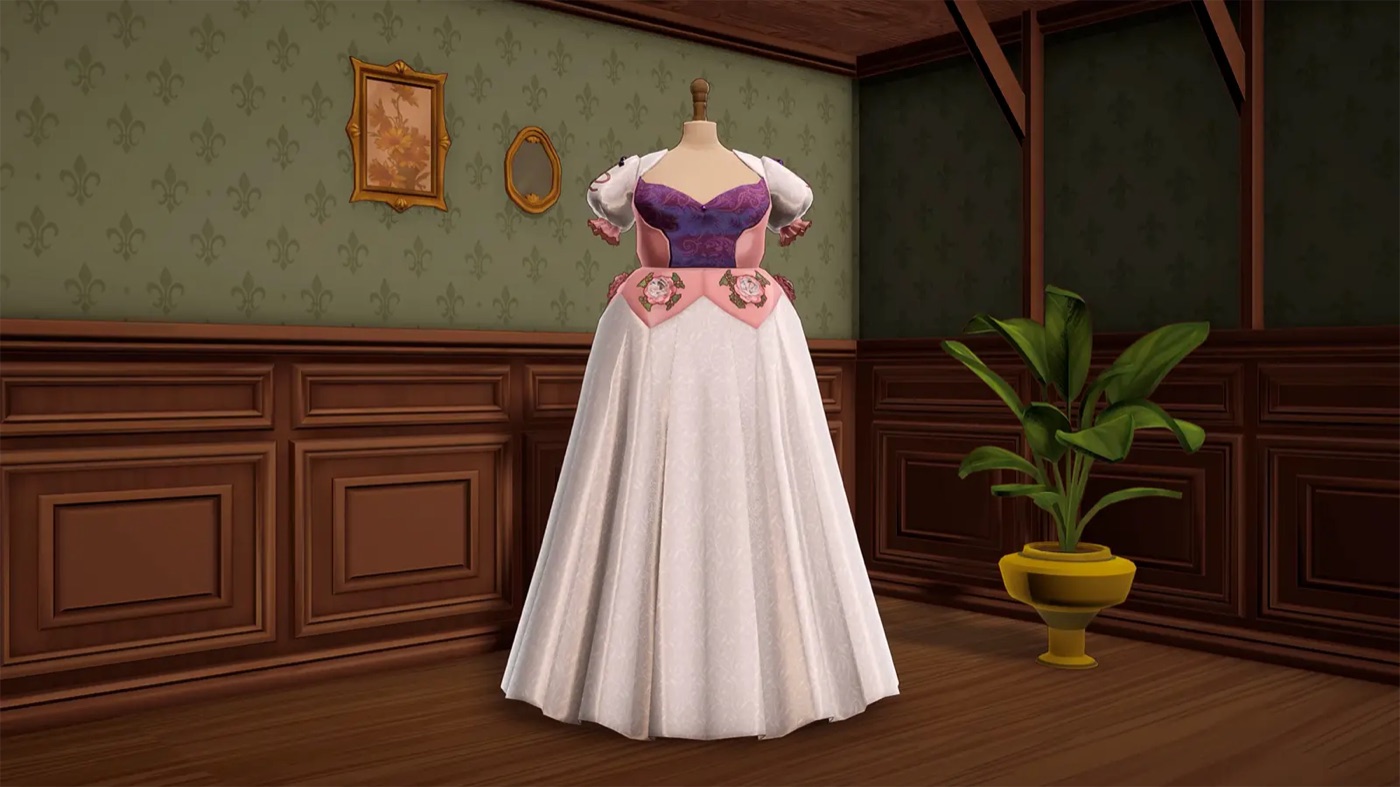
A finished dress on the studio mannequin. This image illustrates the assembled garment, not a particular client's reward.
A gift follows personal style, not the latest commission
Check the recipient's preferences and measurements in the Sketchbook before drafting a gift. Gift Dress asks you to choose a recipient; it does not turn the dress into a match for whoever you select. The garment still has to answer that person's preferences.
Those preferences can name fabric, colour, style scores and decoration. Rose's gift profile, for example, combines Professional and Simple with Wool, Green and Buttons. That is a different target from her Chilly Overtime commission, which asks for warmth and places limits on Cute and Romantic. Do not carry a story commission's brief over to a gift just because the recipient is the same.
On a client record, keep Personal style, Gift preferences and the individual commission cards separate. The star-by-star personal-style words help identify the gift's theme; the gift requirement lines give the targets. A story request can deliberately ask for something outside that theme.
Before handing over a gift, compare the dress with the recipient's full gift profile, including its decoration requirements. A suitable colour does not replace a named accessory, and enough accessories do not replace a fabric percentage. Check the final garment rather than only the materials you bought.
A different client needs a fresh fit check
Each client has her own measurements. A dress intended for Rose is not automatically fitted to Prudence, even if the same bodice and fabric would meet both briefs. Use the recipient's measurements when setting up the mannequin and drafting the garment.
The client profiles show approximate tape readings in centimetres. Treat them as a reference beside your own saved measurements, not an exact dial setting: where you hold the tape can affect the reading. Work from the client in your game before cutting material for an expensive dress.
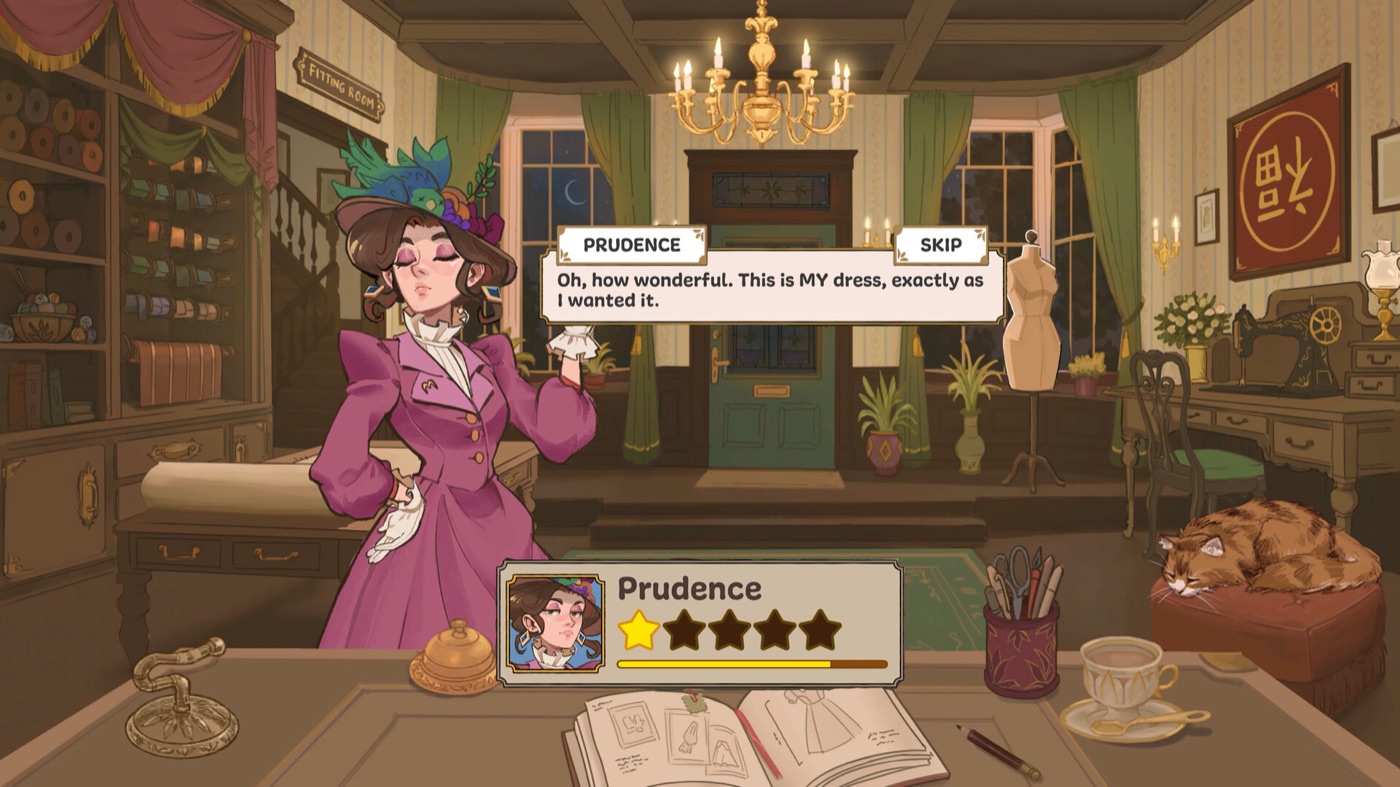
A client conversation and evaluation card in the studio. Check the recipient and current brief before handing over a finished dress.
The same client can ask for the opposite dress next time
Rose provides a useful example of why a favourite design is not a universal answer. Chilly Overtime limits Cute and Romantic, while Rodent Relations asks for Cute and Playful. Raising a tag to solve one request can make the other fail. Read the inequality as well as the tag name.
Use the commission record for the active request's budget, material restrictions and accessory counts. Use the client's unlock list for the pattern you are trying to earn. These answer different questions: one determines whether the dress passes now; the other tells you which friendship you are advancing.
If you are short of a particular style score, compare the bodice, skirt, sleeves, collar, fabric and decorations together before changing recipients. Those parts all contribute to the design. A new friendship unlock gives you another component to consider, not a guarantee that the finished dress will pass every line.