How to Get 100% Quality in Dressmaker
Last updated: 2026-09-28 · 9 min read
Quality is the only requirement every commission in Dressmaker asks for, and it is the one players most often fail while believing they have done everything right. You follow the stitch line perfectly, the seam looks clean, and the dress still reads 78 when the card wants 80. The reason is that quality is not one score — it is two, fed from two different rooms, and the first one is decided before you ever touch the machine.
Quality comes from grain alignment while cutting and stitching accuracy on the machine. A single panel cut off-grain caps the whole dress, so flawless stitching cannot rescue it. If your score is stuck just below target, re-check every panel's alignment before you blame your sewing.
The Two Inputs
Cutting happens at the table, where each pattern piece is placed on the fabric and rotated until it sits square to the cloth. Sewing happens later, on the machine, where you guide the pinned panel along a printed dotted line. Both contribute to the quality of the finished dress, but they do not contribute on equal terms.
Stitching is the visible, obvious half — you can feel yourself straying from the line and the readout drops as you do. Grain alignment is the invisible half. It is confirmed at the moment of cutting, it produces no error message, and it follows the panel all the way to handover. That asymmetry is why the same mistake keeps being reported: players fix the half they can see.
Grain Comes First
Fabric has a direction — the run of its threads. Each pattern piece carries an alignment indicator showing how it should sit relative to that direction, and the game confirms a correct placement visually while you arrange the panel. Get it right and the panel behaves; get it wrong and that piece is capped, permanently, no matter what happens afterwards.
The practical routine is to treat alignment as a per-piece checkpoint rather than a one-time setup. Place the panel, confirm it, then cut. The failure mode is placing the first two pieces carefully, getting comfortable, and rushing the remaining six — because one misaligned piece is enough to cap the dress, and it is usually one of the last pieces cut rather than the first.
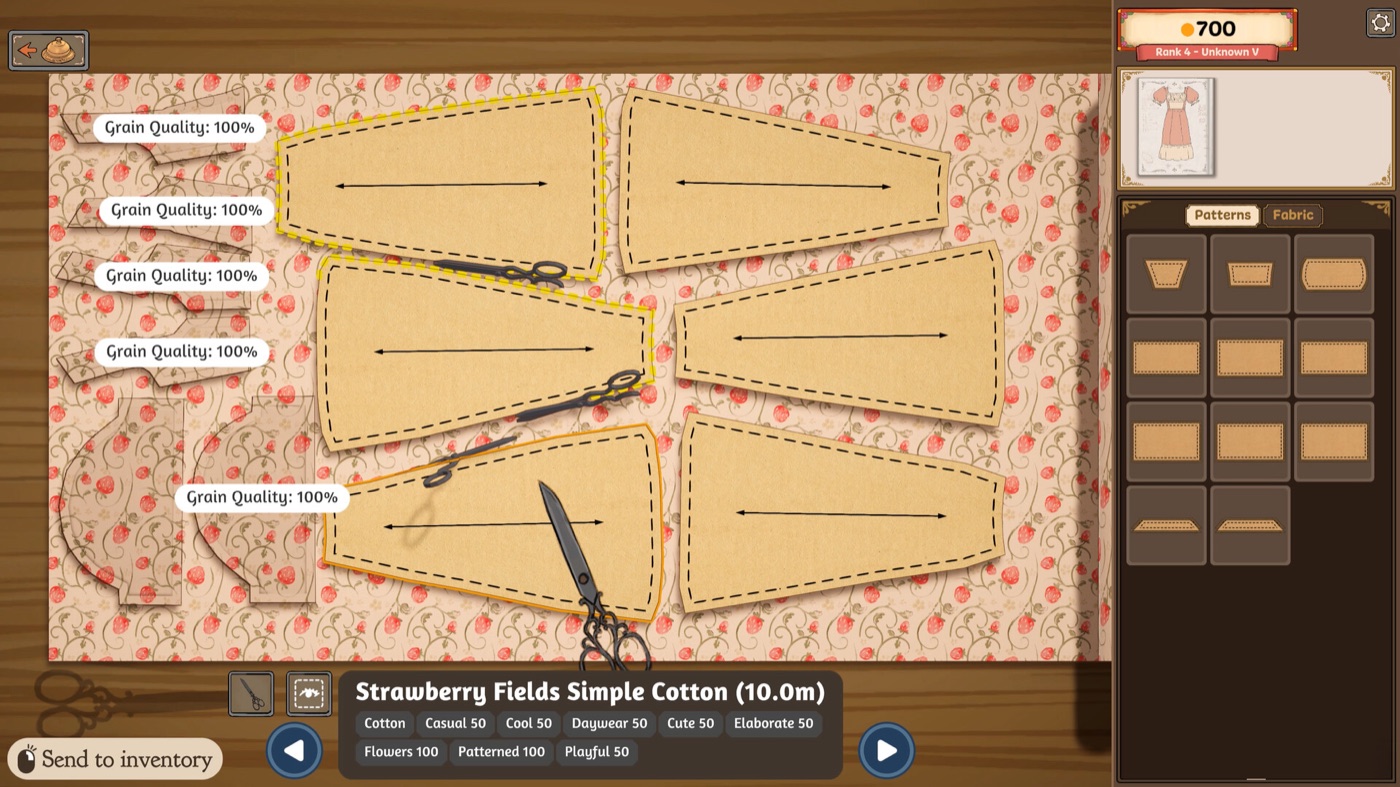
FIG. 01 — Each placed panel reports its own grain status while you arrange it. Check every piece at this stage, including the small ones.
When you rotate a panel to align it, do not let the cloth move underneath. A piece can read as correctly aligned and then shift as you continue arranging the rest, which produces the frustrating case of a dress that looked right at the table and scores low at handover. Settle the fabric, then place.
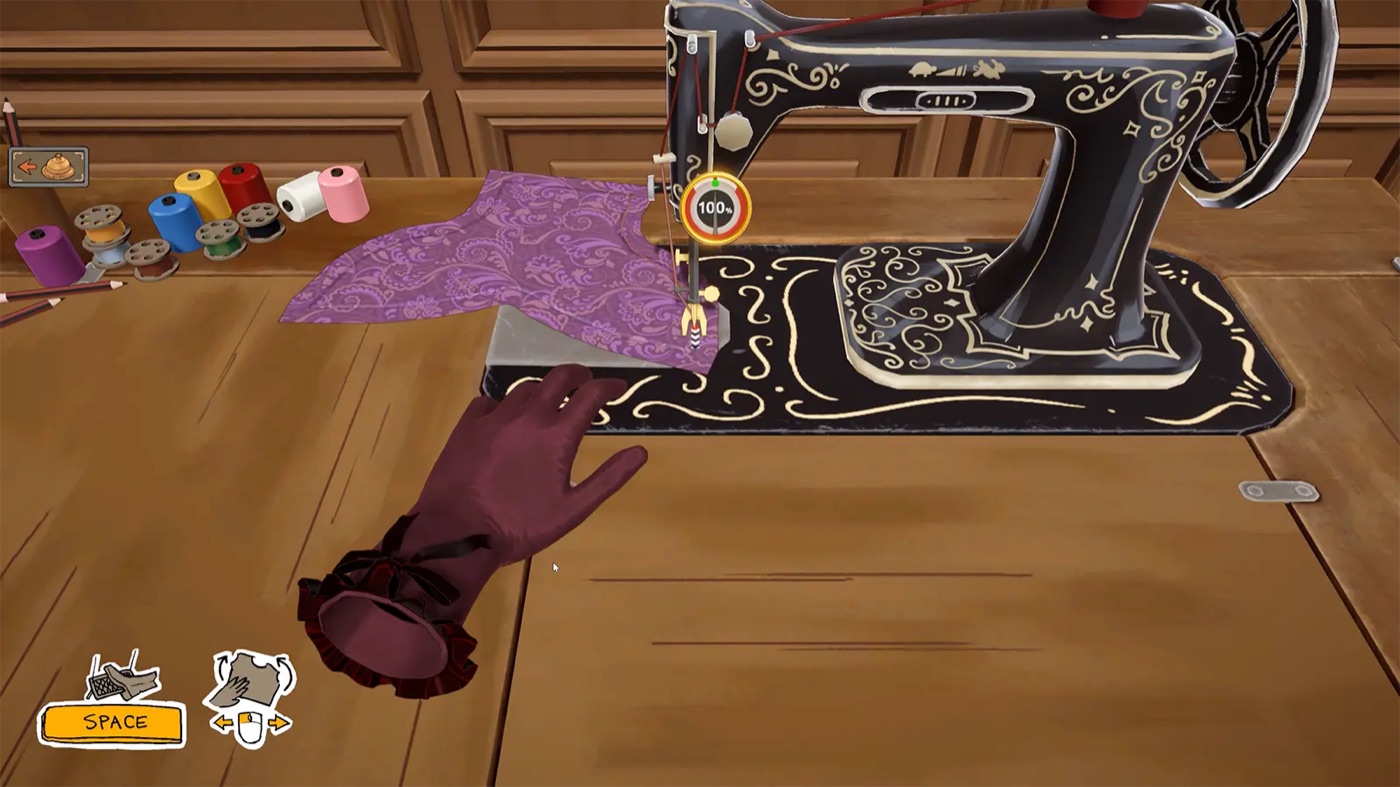
FIG. 02 — The stitch readout while a seam is guided. Straying from the printed line drops this number quickly, and the printed line is hardest to follow on curves.
Stitching Second
On the machine you guide the panel along a printed stitch line. Straying drops the score quickly, and the drop is not proportional — a small wobble costs more than it looks like it should. The stitch lines are at their most demanding on curves, where the panel wants to rotate under the needle and your instinct is to go faster to get the difficult section over with. Going slower through curves is the single most effective change most players can make.
The machine's thread colour is adjustable, and on some fabrics that is not cosmetic — a thread that contrasts with the cloth makes the line easier to follow, which is a legitimate way to buy yourself accuracy on a difficult panel. The build also exposes the spools directly in the sewing scene, so the change is a click rather than a menu trip.
Diagnosing A Low Score
Work down this list in order. The first two account for nearly every case of a dress that will not reach its target.
| Symptom | Most likely cause | What to do |
|---|---|---|
| Score sits a few points below target and stitching looked perfect | One panel cut off-grain | Recut that section. Check the small panels first — sleeves and collars are the usual culprits. |
| Score drops sharply partway through the seam | Strayed from the line on a curve | Slow down through curved sections and use a contrasting thread colour. |
| Score is fine but the commission still fails | The requirement was a ceiling, not a floor | Look for "at most" wording and a style tag you have overshot on the sketchbook total. |
| Dress is accepted but the client seems unimpressed | Quality cleared, style did not match closely | Style tags are scored separately from quality. Re-check the requirement card. |
| Decoration does not rescue a low score | Accessories do not add quality | Add decoration for style tags and requirements. Quality is fixed at cutting and sewing. |
Caps And Curves
Two mechanical details explain most of the remaining confusion.
The first is the cap. Quality behaves as a minimum across panels rather than an average of them — if every panel is clean except one, the dress is treated as if the exception governs. This is why a dress with seven perfect sections and one rushed sleeve can score lower than a simpler dress cut entirely cleanly, and it is the argument for choosing a simpler silhouette when a commission's quality threshold is high.
The second is the fabric's appearance. Printed and patterned cloth makes the stitch line harder to read, and very light fabric makes the outline harder to see against the table. Neither changes the mechanic, but both change how hard it is to execute, so a high-quality commission is a reasonable moment to prefer plainer cloth even where the tags would allow something more decorative.
What Quality Does Not Come From
Three things feel like they should affect quality and do not, and each one has cost somebody a pile of fabric.
Decoration is the most common. Accessories and trims are added after the sewing is finished, and they contribute style tags only — no amount of lace will lift a dress that was cut badly. Spending on decoration to rescue a low score is money that cannot help.
Fabric price is the second. An expensive silk is not higher quality than a cheap cotton in mechanical terms; it carries different style weights and a higher cost, which are separate properties. Nor does fabric type change the alignment requirement — every panel of every material needs the same check.
Cutting speed is the third, and it cuts the other way. Going faster while arranging panels is exactly what produces the off-grain piece that caps the dress, and the time saved is measured in seconds against a failed commission. This is the one place in the game where slowing down is strictly better in every case.
Why 100% Is Worth Chasing Early
There is a practical argument for building the alignment habit on easy commissions rather than saving it for the demanding ones. Client friendship rewards the quality of a handed-over dress, not merely whether it passed, so consistently clean work accelerates every friendship level in the game — and friendship levels are what unlock the 155 dress pieces you will need later. A player who treats the first few commissions as practice reaches the harder content with a deeper pattern library than one who scraped through them.
The habit itself is small: place a panel, confirm its alignment, then cut. The failure mode is not ignorance of the mechanic — it is applying it to the first few pieces and coasting on the rest.
Dressmaker Quality Questions
These are the quality questions that come up most often once a player understands that grain and stitching are separate inputs. Each answer is about the quality score specifically.
Does the quality score carry over between commissions?
No. The quality score belongs to the dress, not to your shop or your reputation. A clean 100% quality dress does not make the next one easier, and a capped one does not follow you. What carries over is the friendship credit from a good handover, which is a separate reward.
Should I aim for a higher quality score than the commission asks for?
Aim for the requirement plus a clear margin, and no further. The extra effort of pushing a demanding dress from a comfortable pass to a perfect score is better spent cutting cleanly on an easy one. Client friendship rewards clean work, but there is no benefit to a quality score that exceeds the threshold by more than the margin you need to feel safe.
Why did a dress with perfect stitching still fail its quality requirement?
Because stitching is only half of the quality score. A panel cut off-grain caps the dress no matter how clean the seams are, and the cap applies to the finished garment rather than to that one section. Perfect stitching on an off-grain panel produces a dress that reads below target with no visible defect, which is exactly why the grain check has to happen before the seam does.
Can a higher quality score ever hurt?
Not directly, but it can crowd out other requirements. Effort spent chasing a quality score is effort not spent checking that the style tags, colour constraints and accessory counts are all satisfied, and those fail silently in the same way an off-grain panel does. Treat quality as one requirement among several rather than as the requirement that matters most.